
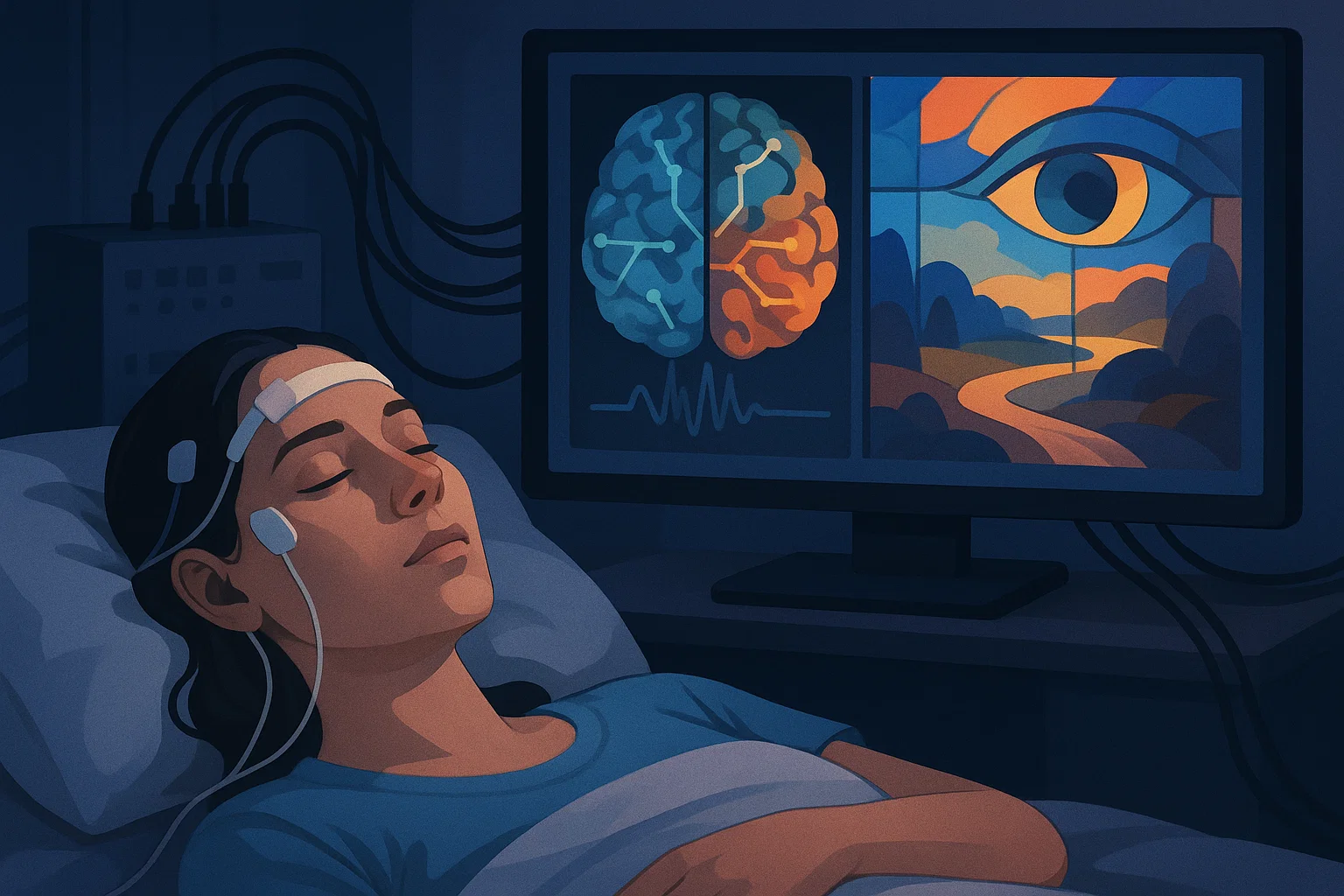
AI for Dreams is an emerging field where machines use artificial intelligence to decode and even recreate what we see in our sleep. By combining brain imaging with advanced AI models, researchers are beginning to unlock the mysteries of our subconscious.
How AI for Dreams Works
-
Brain–Visual Dictionary: fMRI scans record brain activity while people view images. AI learns the neural patterns behind visuals.
-
Dream-Time Recording: During REM sleep, researchers capture brain activity linked to dreaming.
-
Reconstruction with AI: Machines compare dream data to stored patterns, recreating blurred visuals like faces or objects.
-
Narrative Integration: Large language models (LLMs) help connect dream fragments into rough storylines.
Key Research in AI for Dreams
-
Kyoto University: Yukiyasu Kamitani’s team pioneered models to identify dream categories like “car” vs. “face.”
-
DreamNet: An AI framework that decodes dream emotions with up to 99% accuracy using EEG data.
-
Obvious Collective: Paris-based artists using AI and brain scans to turn mental imagery into artwork.
-
Modem Studio: Created a DIY “Dream Recorder” that visualizes dreams from spoken descriptions.
👉 Reference: Wired’s Dream Decoder Study
Benefits of AI for Dreams
-
Mental Health
-
Detect patterns linked to anxiety or PTSD.
-
Help therapists analyze subconscious thoughts.
-
-
Creativity
-
Inspire artists, filmmakers, and writers with subconscious imagery.
-
-
Medical Insights
-
Reveal early signs of neurological conditions through dream analysis.
-
Limitations of AI for Dreams
-
Dream reconstructions are still blurry and abstract.
-
Models must be trained individually for each person.
-
Sleeping in fMRI scanners is uncomfortable and impractical.
-
Sounds, emotions, and storylines remain beyond current AI capabilities.
Ethical Questions
Dreams are deeply private. As AI for Dreams progresses, society must consider:
-
Who owns dream data?
-
Should decoded dreams require consent?
-
Could governments or companies misuse dream analysis?
Conclusion
The field of AI for dreams is in its early stages, but progress is real. Machines can already decode fragments of dream imagery and emotions. The possibilities for therapy, medicine, and creativity are exciting—but the risks to privacy must not be ignored.
Are we ready for machines to enter the world of our dreams?
Read Next: https://mediablizz.com/ai-in-retail-how-giants-transform-shopping-in-2025/