
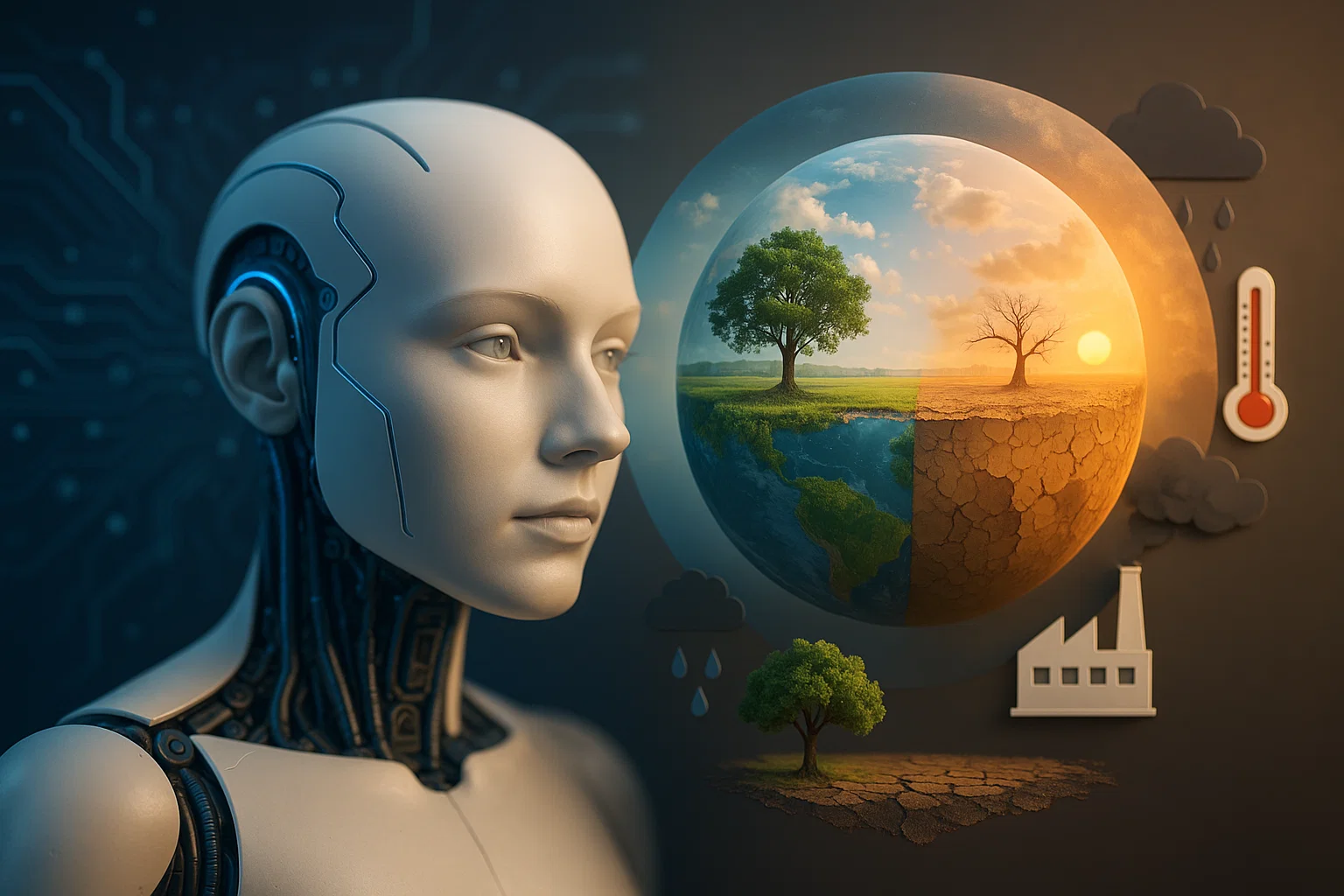
AI and climate change are closely linked. Climate change is one of humanity’s toughest challenges, and artificial intelligence is emerging as both part of the problem and part of the solution. A strong case study is IBM’s Green Horizon Project in China. It shows how AI can predict pollution and optimize energy use but also raises concerns about AI’s own energy cost.
-
What Is the Green Horizon Project?
Launched in Beijing, the Green Horizon Project is IBM’s AI-driven initiative designed to tackle air pollution and energy inefficiency—two of China’s most urgent environmental challenges.
The project uses advanced machine learning models to:
-
Predict Pollution Patterns: By analyzing weather data, traffic flows, factory emissions, and other environmental inputs, the AI system forecasts smog levels up to 72 hours in advance.
-
Optimize Energy Use: It recommends adjustments for coal plants, renewable energy grids, and industrial operations to reduce emissions without stalling economic activity.
-
Support Policy Decisions: The platform helps local governments run “what if” simulations, testing how different policies (e.g., limiting traffic or shutting factories temporarily) could reduce pollution.
-
Why China Needed This

China’s rapid industrial growth turned cities like Beijing and Shanghai into economic powerhouses but also among the most polluted places on Earth. In 2013, Beijing experienced an infamous “airpocalypse,” when air quality reached hazardous levels for weeks.
Traditional monitoring methods weren’t enough; they reacted to pollution rather than preventing it. IBM’s AI system aimed to shift the fight from reactive to proactive, giving cities the foresight needed to reduce pollution before it became life-threatening.
-
Results and Impact
The system provided more accurate forecasts of pollution peaks than traditional meteorological methods. In several pilot cities, officials acted on these insights by introducing temporary restrictions on traffic and factory output, which reduced pollution during critical times. Energy companies also benefited, receiving guidance on how to balance fossil fuels with renewable sources. This allowed them to cut emissions without disrupting energy supply. While the project was not a complete fix for China’s pollution crisis, it demonstrated that AI can be a practical and effective tool in environmental management.
-
The Double-Edged Sword: AI’s Own Energy Problem
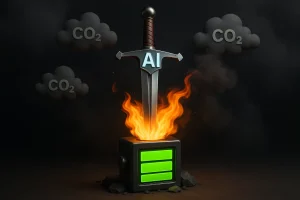
Here lies the paradox: AI models require enormous computing power, consuming energy and producing carbon emissions of their own. For example:
-
Training one large AI model can emit as much CO₂ as five cars over their lifetimes.
-
As AI systems scale globally, their collective environmental footprint could rival that of entire industries.
This creates an uncomfortable reality: AI is being used to fight climate change, but it also contributes to it.
-
Can AI Be Sustainable?
The future of AI in climate action depends on how we design and deploy it. Data centers must transition to renewable energy sources to cut down emissions. Developers should focus on building smaller, more efficient models that require less training power. Edge AI, which processes data locally instead of relying on massive centralized systems, can also reduce energy demand.
Governments have a role too, ensuring that AI adoption aligns with net-zero climate goals. If these changes take hold, AI could evolve into a genuine climate solution rather than part of the problem.
💡 Final Thoughts
IBM’s Green Horizon Project in China shows us a glimpse of what’s possible when AI is applied to environmental crises. It highlights AI’s unique strength—turning massive amounts of messy, real-time data into actionable insights that humans alone could never compute fast enough.
But it also forces us to confront a critical question: Is AI the most important tool in fighting climate change—or just another energy-hungry technology that risks deepening the crisis?
The answer depends on whether we can make AI itself sustainable. One thing is certain: in the battle for our planet’s future, AI will play a central role, either as part of the solution or part of the problem.
Read Next: https://mediablizz.com/ai-for-dreams-decoding-and-recreating-sleep-visions/