
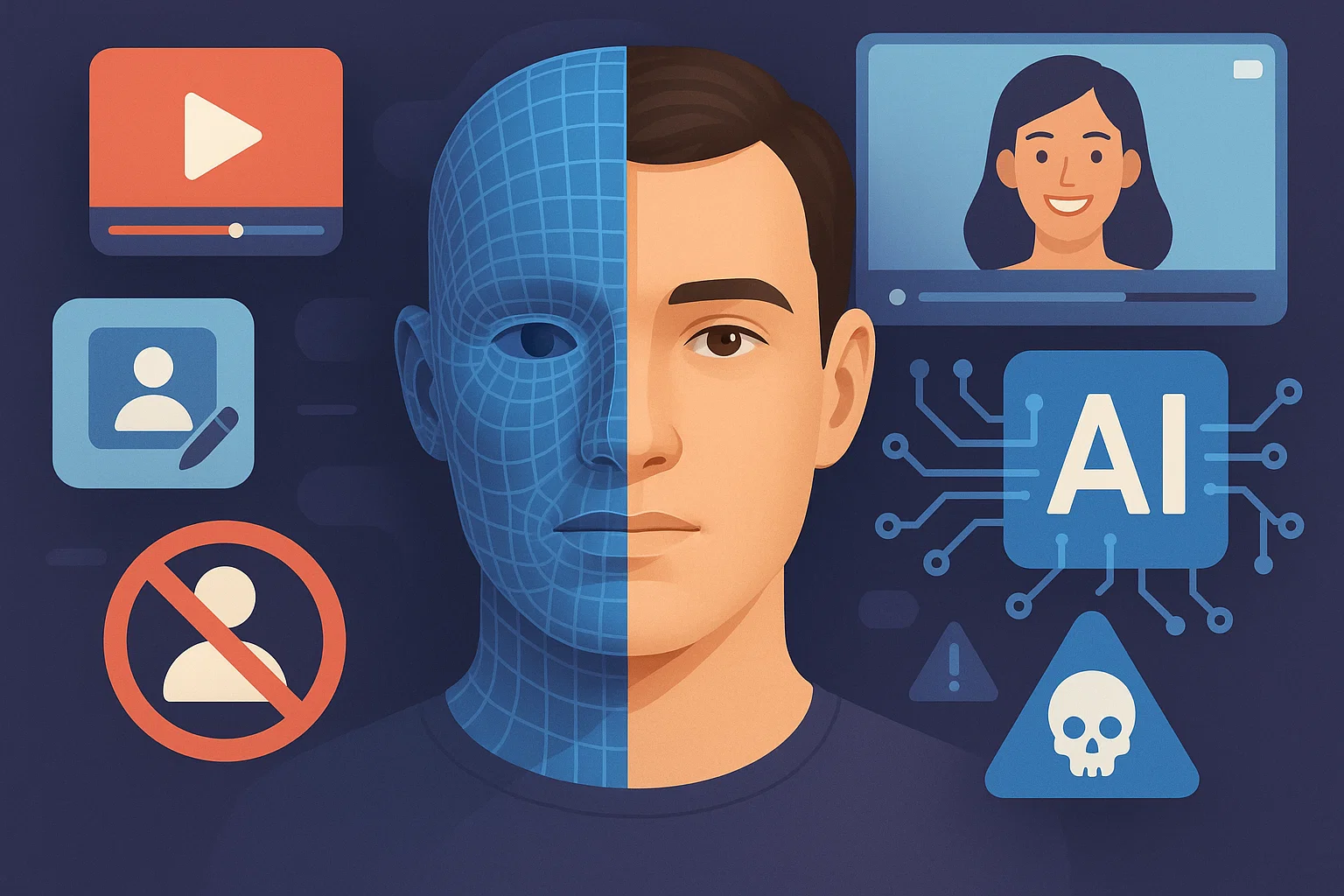
In the last few years, the internet has been buzzing with conversations about deepfakes and synthetic media. These AI powered creations can generate videos, voices, and images that look astonishingly real. While they fuel creativity in entertainment and marketing, they also raise alarms about misinformation, fraud, and ethics. The big question is whether we should see deepfakes as a revolutionary opportunity or a dangerous threat.
What Are Deepfakes and Synthetic Media
Deepfakes are AI generated videos or images that swap or mimic a person’s likeness, making it appear as though someone said or did something they never actually did. Synthetic media is a broader term that covers all AI created content, including text, images, audio, and video. Together these technologies are reshaping how digital content is produced and consumed, often blurring the line between reality and fabrication.
Opportunities of Synthetic Media
There is no denying the positive potential.
- Entertainment: Filmmakers can bring historical figures back to life, de-age actors for new roles, or create immersive stories without expensive CGI.
- Education: Students can learn through interactive training simulations and AI driven tutors that make lessons more engaging.
- Business: Companies can experiment with virtual influencers on social media or create personalized video ads at scale.
These opportunities show how synthetic media can drive innovation across industries.
The Threats of Deepfakes
On the flip side, deepfakes pose serious risks. One of the biggest concerns is misinformation. Fake videos of politicians or celebrities can spread online within minutes, damaging reputations and fueling distrust. Cybercriminals are also exploiting the technology, using AI-generated voices to trick people or bypass security systems. Beyond that, non consensual deepfakes, often targeting women, raise urgent questions about privacy, consent, and human rights. Without clear regulations these risks will only continue to grow.
Striking a Balance
The challenge lies in managing the technology responsibly. Tech companies are working on detection tools to identify manipulated content, while governments are beginning to introduce legislation aimed at preventing abuse. Equally important is public awareness. Teaching people how to recognize synthetic media will help reduce the impact of malicious deepfakes. If guided by ethics and accountability, these innovations could become powerful tools instead of dangerous weapons.
Conclusion
Deepfakes and synthetic media are not inherently good or bad. They are both a threat and an opportunity. Like many disruptive technologies, their value depends on how we choose to use them. With the right safeguards, synthetic media could transform entertainment, education, and business. But if left unchecked, deepfakes could erode trust in everything we see and hear online.
The future of deepfakes and synthetic media rests in finding a balance between innovation and responsibility. The choice is ours.
Read Next: https://mediablizz.com/wp-admin/post.php?post=1787&action=edit