
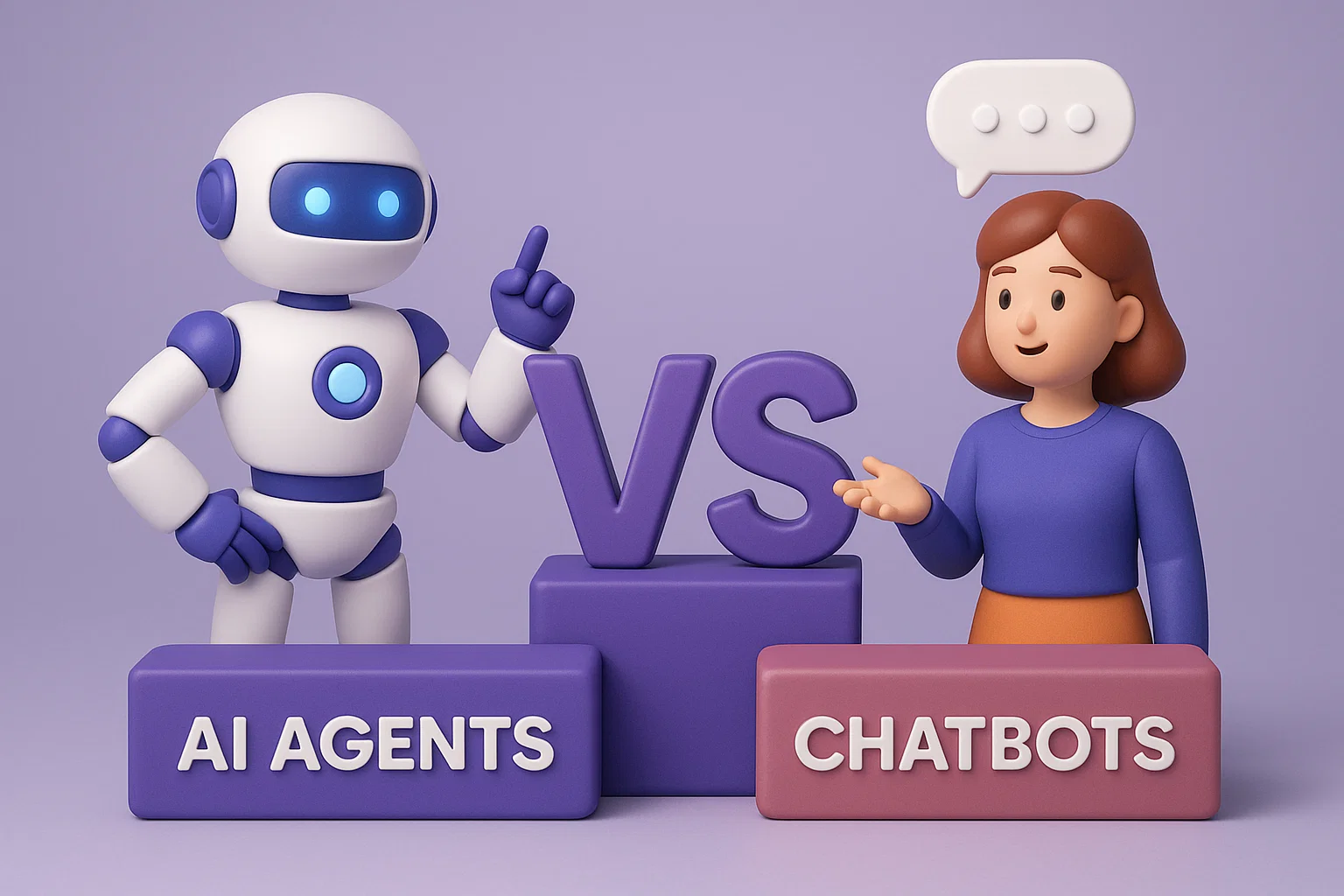
Artificial intelligence is shaping how we interact with technology, but not all AI-powered tools are created equal. Two terms that often get confused are AI agents and chatbots. At first glance, they may look similar; both interact with users and provide responses, but the way they work, and the value they bring, are worlds apart.
What Exactly Is a Chatbot?
Chatbots are the more familiar of the two. They’ve been around for years and are commonly found on websites, customer support systems, or messaging apps. At their core, chatbots are designed to simulate conversation and provide quick answers. Most operate on pre-defined scripts or rules, which means they’re great for simple interactions like:
- Answering FAQs
- Guiding users through step-by-step processes
- Handling basic customer service inquiries
While modern chatbots have become smarter with natural language processing, they are still limited in scope. They respond to queries but rarely go beyond the script. If the user asks something outside of their programmed knowledge, the conversation often hits a dead end.
What Makes an AI Agent Different?
AI agents take things much further. Instead of just responding, they are designed to act autonomously, make decisions, and even complete tasks on behalf of the user. Unlike chatbots, they aren’t confined to scripts—they can adapt, learn, and work toward achieving specific goals.
For example, an AI agent can:
- Book meetings based on your calendar and preferences
- Research competitors and deliver summarized insights
- Automate multi-step business workflows across different software
In short, while chatbots are reactive, AI agents are proactive. They don’t just talk—they do.
The Key Differences in Practice
To simplify, think of a chatbot as a receptionist who answers basic questions and points you in the right direction. An AI agent, on the other hand, is more like a personal assistant who not only schedules your meetings but also follows up, reschedules if needed, and updates your team automatically.
The differences lie in:
- Scope: Chatbots focus on narrow, repetitive tasks, while AI agents handle broader, goal-driven ones.
- Intelligence: Chatbots rely on pre-written logic; AI agents can adapt and learn from context.
- Impact: Chatbots improve efficiency, but AI agents can transform workflows and productivity at scale.
Why This Matters for the Future of AI
Understanding the difference between AI agents and chatbots isn’t just semantics, it shows where artificial intelligence is heading. Businesses that rely only on chatbots may save on customer support costs, but those adopting AI agents can unlock entirely new opportunities for automation and growth.
For everyday users, this means shifting from tools that simply answer questions to digital assistants that anticipate needs and take meaningful action. In the coming years, we may spend less time “clicking through” software and more time delegating tasks to intelligent agents working in the background.
Final Thoughts
Chatbots will continue to play a role in customer interactions, but the future belongs to AI agents. They represent the next step in AI’s evolution, moving from scripted conversations to autonomous, goal-driven action. For companies, innovators, and individuals alike, understanding this shift is the key to staying ahead in a rapidly changing digital landscape.
Read Next: https://mediablizz.com/deepfakes-and-synthetic-media-benefits-and-risks/