
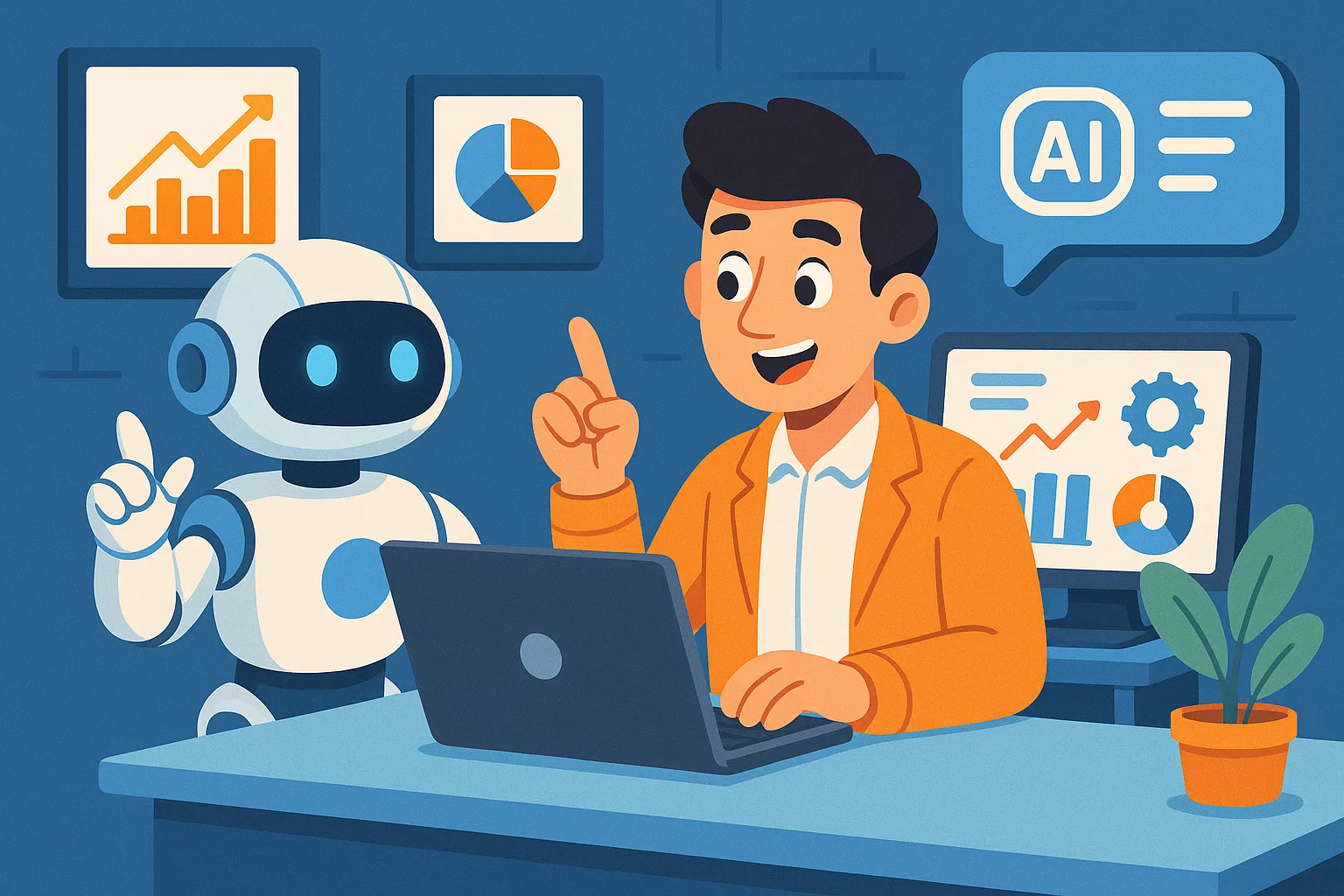
AI automation in business is reshaping how organizations operate, innovate, and grow. From predictive analytics to automated workflows, artificial intelligence is moving beyond routine tasks to make real-time decisions and streamline entire operations. These autonomous AI tools are helping companies save time, reduce costs, and make smarter choices, all while improving customer experience and team productivity.
The Rise of Autonomous AI in Modern Businesses:
Businesses have long used automation to improve productivity, but autonomous AI tools take that concept several steps further. Unlike traditional automation, which relies on fixed rules, these systems learn from data, adapt to new patterns, and make decisions independently.
Common examples include:
-
AI-driven analytics: Tools that detect patterns and make real-time recommendations.
-
Customer service bots: Systems that handle complex queries and personalize responses.
-
Supply chain automation: AI platforms that predict demand, optimize routes, and reduce waste.
This new generation of AI enables companies to react faster to market changes while maintaining accuracy and consistency.
Smarter Decision-Making with AI:
One of the biggest benefits of AI automation in business is smarter, faster decision-making. Autonomous systems process vast amounts of information to detect patterns and anticipate challenges before they happen.
In finance, AI can analyze market trends instantly and provide data-backed recommendations. In marketing, it personalizes campaigns for each customer, improving engagement and return on investment.
By combining speed, accuracy, and adaptability, AI transforms reactive businesses into proactive ones.
Streamlining Operations and Reducing Costs:
Efficiency is at the heart of AI adoption. Autonomous systems can perform repetitive tasks such as scheduling, invoicing, or data entry, freeing teams to focus on strategy, creativity, and customer relationships.
Some key operational benefits include:
-
24/7 performance: AI doesn’t require breaks or downtime.
-
Fewer errors: Algorithms maintain consistent accuracy across tasks.
-
Scalability: Businesses can grow faster without proportionally increasing labor costs.
By integrating these systems into daily operations, companies can reduce overhead and maintain high performance even as workloads increase.
Enhancing Employee Experience and Innovation:
A common misconception is that AI replaces people. In reality, autonomous AI tools enhance human potential. By taking over repetitive or time-consuming work, they allow employees to focus on creativity, problem-solving, and collaboration.
Many organizations now use AI assistants for tasks such as:
-
Research and data summarization
-
Meeting coordination and workflow management
-
Project planning and reporting
This collaboration between people and machines creates more fulfilling roles and a culture of innovation.
Challenges and Ethical Considerations:
As with any powerful technology, adopting autonomous AI comes with challenges. Businesses must ensure data privacy, transparency, and fairness in how these systems make decisions.
Ethical AI deployment requires:
-
Clear accountability: Understanding who is responsible for AI-driven decisions.
-
Bias reduction: Ensuring algorithms are trained on diverse, representative data.
-
Employee training: Helping staff understand and work effectively with AI systems.
Responsible use will define which companies truly succeed in the age of automation.
The Future of Autonomous AI in Business:
The future of business is deeply intertwined with AI autonomy. As tools become more advanced, they’ll handle complex tasks from product design to end-to-end supply chain management with minimal oversight.
Companies that embrace this transformation early will gain a competitive edge in agility, efficiency, and innovation. The organizations of tomorrow will be defined not by how much AI they use, but by how intelligently they use it.
Final Thoughts:
Autonomous AI tools are not just a trend; they’re the next evolution in business operations. By combining human creativity with machine precision, they empower teams to innovate, optimize, and grow sustainably.
In the years ahead, the most successful businesses will be those that see AI not as a replacement for people, but as a partner in progress.
Read Next: https://mediablizz.com/automation-drones-and-robots-transforming-everyday-life/