
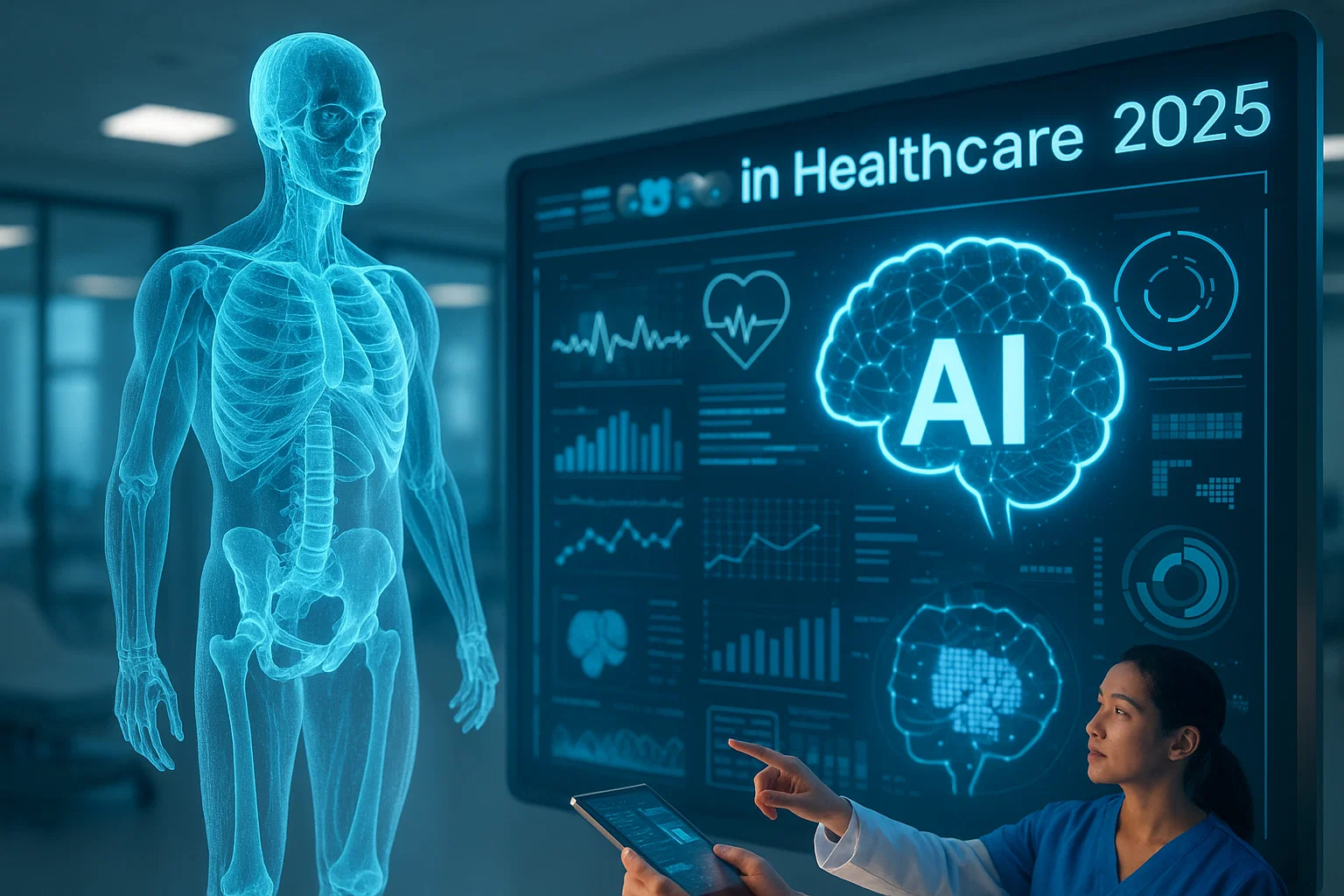
AI in healthcare 2025 marks a turning point in how we diagnose diseases, develop treatments, and personalize patient care. Artificial intelligence is no longer a futuristic concept; it’s a working partner in laboratories, hospitals, and even patients’ homes. From early drug discovery to individualized therapies, AI is reshaping the entire medical ecosystem.
How AI Is Transforming Drug Discovery:
Developing a new drug can take over a decade and billions of dollars. AI is changing that by identifying potential compounds faster and more accurately. Machine learning models can analyze millions of molecules, predict their interactions, and suggest promising candidates for further testing.
Some notable AI-driven pharma innovations include:
-
Insilico Medicine: Uses deep learning to identify new drug targets and design molecules in days, not years.
-
Exscientia: Pioneering AI-based drug discovery with compounds already entering human trials.
-
BenevolentAI: Leveraging knowledge graphs to accelerate R&D for neurological and inflammatory diseases.
These companies are shortening timelines, cutting costs, and reducing the risk of failed trials, a major breakthrough for both startups and established pharmaceutical firms.
AI and Precision Medicine:
The future of healthcare is personalized. Rather than one-size-fits-all treatments, AI enables doctors to tailor therapies to each individual’s genetics, lifestyle, and medical history.
Through AI-powered genomics, algorithms can analyze DNA data to predict disease risks and suggest preventive measures. Personalized cancer therapies, for example, are now developed based on how a patient’s unique genetic profile interacts with specific drugs.
-
Tempus uses AI to match cancer patients with optimal treatment options.
-
PathAI applies deep learning to pathology images for faster and more accurate diagnoses.
-
Owkin collaborates with global research hospitals to train AI models on federated data enhancing outcomes while protecting patient privacy.
By 2025, AI in healthcare is expected to play a key role in predicting illnesses, guiding treatment, and improving long-term care outcomes.
Revolutionizing Clinical Trials
Clinical trials are another area undergoing major transformation through AI in healthcare 2025. Advanced algorithms are now being used to identify suitable participants more quickly, monitor patient responses in real time, and even predict potential side effects before they occur. This level of intelligence allows researchers to design safer, more efficient studies and adapt them as new data emerges.
Startups such as Unlearn.AI and Phesi are leading this shift by using simulated digital twins, AI-generated models of patients to replicate trial conditions virtually. These digital twins enable scientists to test hypotheses, refine treatments, and forecast outcomes without exposing real participants to unnecessary risks. By reducing trial durations and improving accuracy, AI is not only accelerating drug approvals but also making the entire research process more ethical, cost-effective, and inclusive.
Enhancing Hospital Operations and Diagnostics:
Hospitals are leveraging AI healthcare tools to improve everything from diagnostics to workflow management. Radiology AI models can now detect tumors, fractures, or anomalies faster than human eyes, giving doctors more time to focus on patient care.
AI is also improving:
-
Scheduling and resource management: Predicting bed availability and staff needs.
-
Medical imaging: Tools like Google DeepMind’s AI detect eye disease and cancer earlier.
-
Patient monitoring: Wearables powered by AI alert medical teams to changes in vital signs.
This integration of technology reduces human error, improves diagnosis speed, and enhances healthcare accessibility, especially in underserved areas.
The Role of Startups and Pharma Collaboration:
The next wave of AI in healthcare 2025 will come from collaboration. Startups are providing agility and innovation, while major pharmaceutical companies bring funding and scale. Partnerships between AI-first firms and traditional healthcare players are already driving breakthroughs in oncology, neurology, and rare diseases.
Some promising collaborations include:
-
Pfizer and Cyclica: Using AI to uncover novel drug interactions.
-
AstraZeneca and BenevolentAI: Co-developing treatments for complex diseases.
-
Sanofi and Exscientia: Leveraging AI for drug design and molecule optimization.
Together, they’re redefining how new medicines are created and delivered.
Ethical and Regulatory Considerations:
As AI in healthcare continues to evolve, the policies and ethical frameworks that guide its use must advance alongside it. Issues such as data privacy, algorithmic bias, and patient consent have become central to the responsible development of medical AI. Regulatory bodies like the FDA in the United States and the EMA in Europe are already working to establish clear standards for approving AI-powered medical tools, ensuring they meet strict safety and transparency requirements.
Responsible innovation in this field depends on several key principles. First, there must be transparency in how algorithms make decisions, allowing both healthcare providers and patients to understand and trust the technology. Second, patient data must be handled securely and anonymized to protect privacy at every stage of research and care. Finally, human oversight should remain an integral part of all clinical and diagnostic processes, ensuring that technology supports rather than replaces professional judgment.
Above all, ethics and empathy must remain at the heart of healthcare’s digital transformation. The success of AI in medicine depends not only on technical excellence but also on its ability to serve people with fairness, dignity, and compassion.
Looking Ahead:
By 2025, the global AI in healthcare market is projected to exceed $100 billion, with adoption across diagnostics, drug discovery, and patient care. The convergence of data science, biology, and medicine is making healthcare more predictive, preventive, and personalized.
From AI-driven labs to intelligent hospitals, technology isn’t replacing doctors; it’s empowering them to deliver better outcomes for every patient.
Final Thoughts:
AI in healthcare 2025 represents the future of medicine, faster drug discovery, precision treatments, and improved patient care. Startups, researchers, and pharma giants are working together to make healthcare smarter, more inclusive, and more efficient.
The result is a system that saves lives, reduces costs, and brings cutting-edge innovation to everyone, everywhere.
Read Next: https://mediablizz.com/how-autonomous-ai-tools-are-changing-business-operations/