
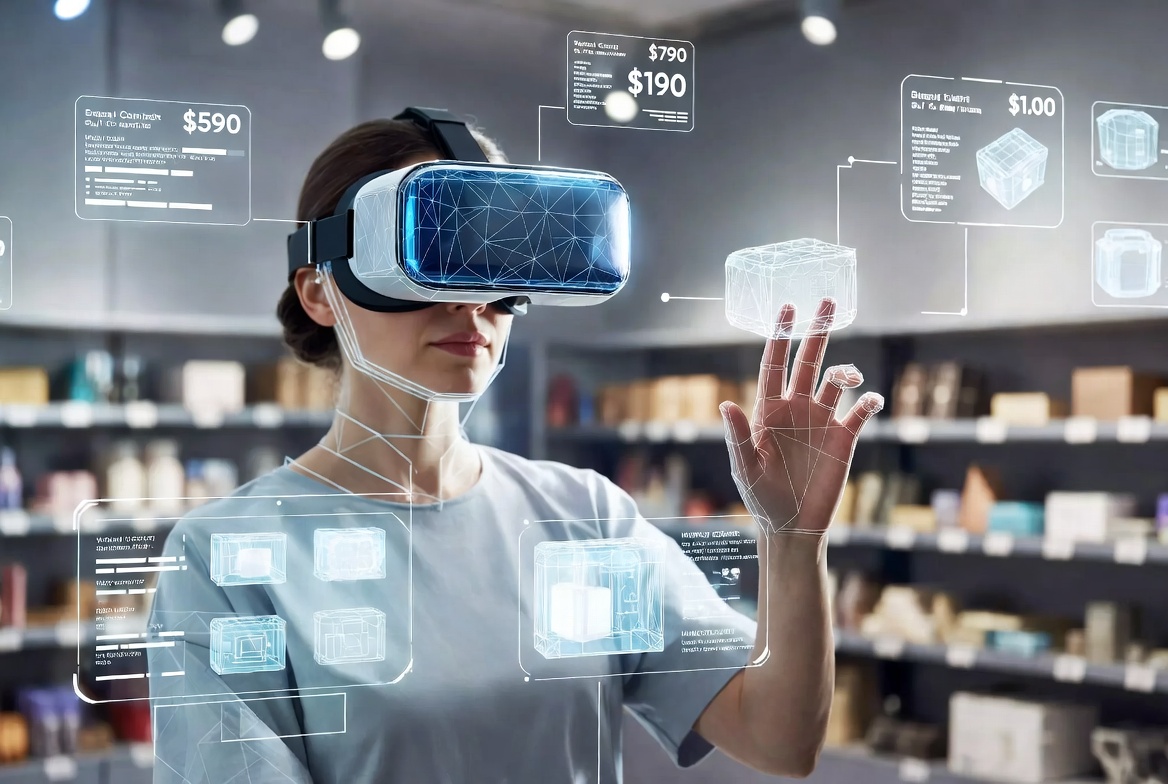
The world of AR/VR e-commerce is transforming how customers shop and connect with brands. In 2025, Augmented Reality (AR) and Virtual Reality (VR) have moved far beyond experimental tech; they are now core tools that make online shopping immersive, interactive, and more human. Modern shoppers want to experience products before they buy them, and AR/VR delivers exactly that.
1. AR/VR E-commerce Creates Truly Immersive Shopping
The rise of AR/VR e-commerce has changed what customers expect from online shopping. Instead of relying on static product photos, shoppers can now interact with items in ways that feel real. AR helps users visualize how products fit into their homes or lifestyles, while VR lets them explore entire virtual stores from their living rooms.
Brands that offer these immersive experiences often see higher engagement and quicker buying decisions.
2. AR Try-On Features Are Becoming the New Norm
Virtual try-ons have rapidly become a must-have feature in online shopping. AR allows customers to test:
-
Clothing and outfits
-
Makeup and skincare
-
Glasses and accessories
-
Shoes and footwear
These features reduce guesswork and help customers feel confident about what they’re buying. They also lead to fewer returns and happier shoppers.
3. VR Stores Reinvent the Digital Shopping Experience
VR takes online shopping to the next level by creating digital environments that mimic real stores. Instead of browsing a website, customers can “walk” through a virtual showroom.
VR stores offer:
-
A more engaging product discovery experience
-
360° interactions with products
-
Virtual events and launches
-
Immersive brand storytelling
This type of shopping feels fresh, fun, and memorable—exactly what modern brands aim for.
4. AI Makes AR/VR Shopping Smarter and More Personal
When AI is added to AR/VR, the shopping journey becomes incredibly personalized. AI can study behaviour and preferences to recommend products and create virtual experiences tailored to each user.
This includes:
-
Personalized product suggestions
-
Smart virtual styling tips
-
Customized virtual store layouts
-
Accurate recommendations based on browsing history
The result is a digital shopping experience that feels almost like working with a real in-store expert.
5. AR/VR Reduces Uncertainty and Builds Trust
One of the biggest challenges in online shopping is not being able to physically see or touch products. AR/VR tackles this problem head-on by giving customers a clear and interactive view.
Shoppers can:
-
Rotate products in 3D
-
View details up close
-
Understand scale and size
-
See items in real-life settings
This level of clarity builds trust and significantly reduces cart abandonment.
6. AR/VR Brings Brand Stories to Life
AR and VR offer fun and creative ways for brands to tell their stories. Instead of relying solely on text or video, companies can create interactive experiences such as:
-
AR-enabled packaging that reveals hidden content
-
VR tours showing how products are made
-
Interactive demos that explain product features
These immersive experiences help customers feel more connected to the brand and make the shopping journey more memorable.
7. Higher Engagement and Stronger Customer Loyalty
Shoppers spend more time engaging with brands that use AR/VR, simply because the experience is more enjoyable. Brands benefit from:
-
Higher engagement
-
Longer time spent exploring products
-
Better conversion rates
-
Increased customer satisfaction
Customers who enjoy the digital experience are more likely to return and recommend the brand to others.
8. AR/VR Technology Is Now Accessible to Everyone
In the past, AR/VR features were limited to big companies with big budgets. Today, tools built into platforms like Shopify and WooCommerce make AR/VR integration affordable—even for startups and small businesses. This has helped AR/VR e-commerce spread across industries at a rapid pace.
Conclusion
AR and VR are reshaping the future of online shopping. The next era of AR/VR e-commerce is immersive, interactive, and deeply personalised. Brands that adopt these technologies now will lead the digital marketplace with stronger engagement, better customer experiences, and higher loyalty.
The future of e-commerce isn’t just digital, it’s immersive.
READ NEXT: https://mediablizz.com/build-tech-enabled-startup-2025/