
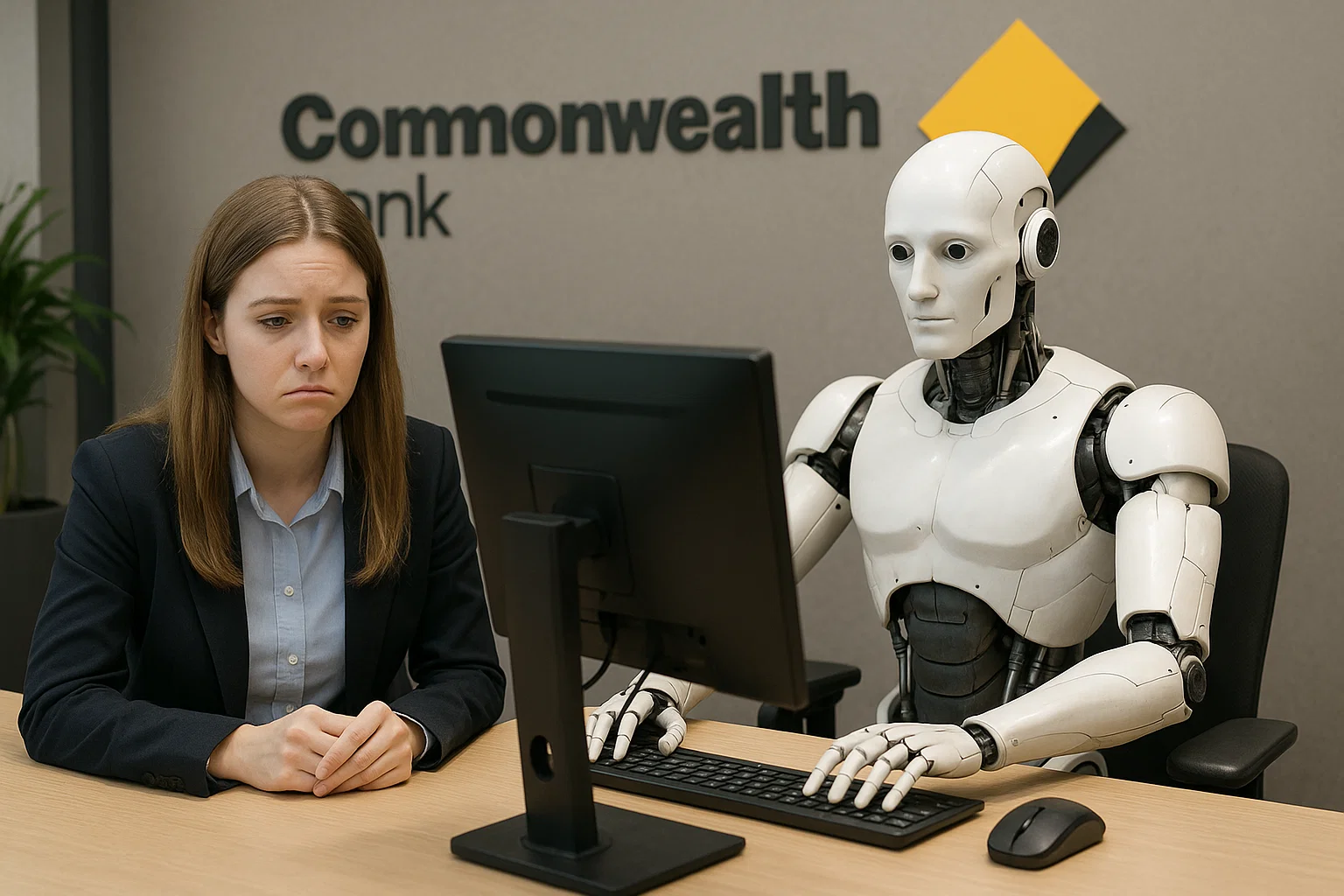
Artificial intelligence (AI) is transforming industries at lightning speed. From healthcare to finance, automation and machine learning are being used to cut costs, boost efficiency, and unlock new opportunities. Yet behind the headlines about progress, there are also untold stories of disruption and loss. One such case is that of Kathryn Sullivan, a longtime employee at Australia’s Commonwealth Bank, who unexpectedly lost her role to the very AI chatbot she helped train. Her experience shines a light on the risks of relying too heavily on automation and raises an important question: what happens when AI takes your job?
A Career Built on Loyalty
Kathryn Sullivan had worked at the Commonwealth Bank for more than 25 years. Over that time, she developed deep expertise, built trust with colleagues and customers, and proved her commitment to the organization. Like many professionals, she believed her hard work and experience would ensure stability. Instead, she became one of the first employees to face direct replacement by an AI system.
What made her story especially ironic and painful was the fact that she had been directly involved in training the chatbot that would later take over her responsibilities. For Sullivan, the bank’s decision was not just a professional setback but a personal shock that undermined her decades of loyalty.
Shock and Disappointment
When Sullivan was told her role had been made redundant, she described herself as “completely shell-shocked.” She revealed during an AI symposium at Parliament House that she felt abandoned by her employer, noting that the bank did not respond to her questions for over a week.
Her statement captured the emotional cost of automation:
“We just feel like we were nothing; we were a number.”
For employees who have devoted decades to a company, such a dismissal can feel not only unfair but also dehumanizing. The sudden shift from valued professional to expendable resource highlights how poorly managed AI adoption can damage trust and morale.
When AI Fails to Deliver
Ironically, the bank’s experiment with automation did not go as planned. While the chatbot was able to handle certain tasks, it quickly became clear that it lacked the nuance and judgment required for the role. Customers and internal teams noticed the gaps, and the system could not fully replicate the expertise that employees like Sullivan had brought to the job.
Realizing its mistake, the Commonwealth Bank eventually reversed its decision, apologizing to staff and offering them their jobs back. But for Sullivan, the damage was already done. She refused the offer because she was assigned to a different role that did not reflect her experience or skills. The apology, while important, came too late to rebuild her trust in the organization.
The Bigger Question: What Happens When AI Takes Your Job?
 Sullivan’s experience is not just an isolated case—it’s part of a growing global conversation. As businesses integrate AI into their operations, millions of workers are left to wonder about their own futures.
-
The promise of AI lies in efficiency, scalability, and cost reduction. Chatbots, for instance, can handle thousands of inquiries at once, something no human team could manage.
-
The peril of AI is the displacement of human workers, the erosion of institutional knowledge, and the risk of treating employees as replaceable parts rather than valued assets.
This tension highlights the need for balance. Technology should enhance human potential, not erase it. Companies that adopt AI without considering its human impact risk damaging their reputation, employee loyalty, and even long-term performance.
A Call for Responsible AI
Despite her painful experience, Sullivan has not become anti-technology. On the contrary, she has acknowledged the usefulness of AI but emphasized the urgent need for safeguards. In her own words: “While I embrace the use of AI, there needs to be some sort of regulation to prevent replacing humans unfairly.”
Her perspective underscores a crucial point: the problem is not AI itself, but how organizations implement it. With proper regulation, transparent policies, and responsible leadership, businesses can harness AI’s benefits without devaluing their people. Sullivan’s story is a reminder that innovation should be about progress for both companies and employees.
Conclusion
Kathryn Sullivan’s case is a powerful example of what can go wrong when automation is rushed or poorly managed. Her story forces us to ask bigger questions: not just “Can AI replace humans?” but “Should it—and at what cost?”
As AI adoption accelerates across industries, companies must ensure they are not just chasing efficiency at the expense of humanity. The future of work should be built on a partnership between people and machines, where technology supports human skills rather than undermines them.
The lesson is clear: when AI takes your job, it’s not just about efficiency. It’s about fairness, dignity, and the value we place on human experience.
Read Next: https://mediablizz.com/mark-zuckerberg-600-billion-meta-investment-revealed/